

Process Digitalization with AI for Businesses
Many companies rely on processes that have evolved over the years: emails serve as makeshift workflows, data is entered multiple times, and information is scattered across various systems. This wastes time, increases the error rate, and hinders scalable growth.
Process digitization with AI means improving these processes in a targeted manner. Recurring tasks are automated, information is processed faster and decisions are better prepared. AI is not an end in itself, but a tool to make processes more efficient, robust and transparent.
BSB supports companies in identifying precisely this potential and transforming it into functioning solutions – from analysis to implementation during ongoing operations.

Why companies need to digitize their processes
Non-digitalized or only partially digitalized processes slow down companies in many places at the same time. Media disruptions between email, Excel, ERP, specialist systems and documents occur, particularly in established structures. Information is maintained twice, approvals take too long and manual work ties up valuable resources.
The consequences are clear to see in everyday life: high processing costs in the back office, slow response times in sales and service, a lack of transparency in processes and an increased susceptibility to errors due to manual entries.
The more companies grow or the more complex requirements and interfaces become, the more obvious these weaknesses become. This is precisely where process digitalization comes in.
What process digitization with AI means in concrete terms
Process digitization with AI means designing business processes in such a way that information can be automatically recorded, structured, forwarded and processed. While traditional automation is based on clear rules, AI is used where unstructured content needs to be processed – for example, emails, documents, inquiries or free text.
The aim is not to use as much technology as possible. The aim is to make processes noticeably better: faster in processing, cleaner in execution, more transparent in workflow and more robust with increasing volumes.
Companies benefit above all when AI is used in the right places – where traditional workflows reach their limits.
The biggest challenges when introducing AI into processes
Existing systems and technical hurdles
Many companies work with legacy IT landscapes. Legacy systems, missing interfaces and inconsistent data structures make it difficult to integrate new solutions. AI can only be meaningfully integrated into processes if data flows and system access are clearly defined.
Data quality and data silos
Incomplete, distributed or inconsistent data is one of the biggest hurdles for functioning AI applications. If information is isolated in individual departments or is maintained in varying quality, the reliability and benefits of the solution are significantly reduced.
Acceptance within the company
Many employees are skeptical about AI – especially when decisions seem incomprehensible or there is uncertainty about the impact on roles and tasks. Acceptance is achieved through transparency, clear responsibilities and concrete relief in day-to-day work.
Data protection and compliance
The use of AI always touches on issues of data security, data protection and regulatory classification. Successful process digitalization with AI therefore requires not only technology, but also governance, clear rules and comprehensible processes.
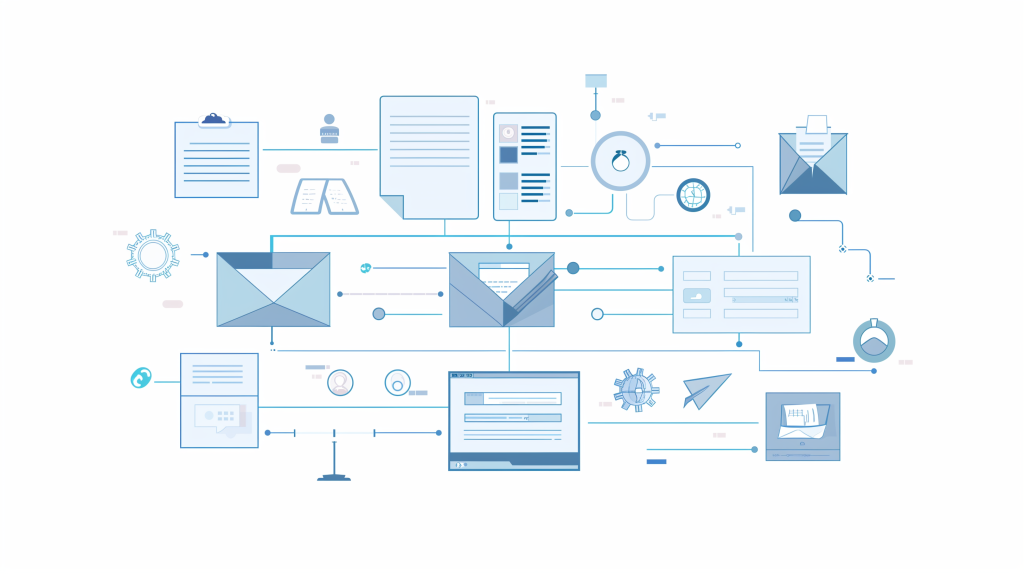
How process digitization with AI works in practice
Successful projects do not start with technology, but with a clear view of the process.
First, processes are identified where the greatest leverage for automation and digitalization lies. Processes with high volumes, recurring patterns, manual intermediate steps or long processing times are particularly relevant.
The next step is to check which data is available, which systems need to be connected and where human decisions are still required.
Based on this, workflows, interfaces and automation logic are defined. AI is added where content needs to be recognized, classified, extracted, prioritized or summarized.
Instead of large transformation programs, it often makes more sense in practice to start with a clearly defined use case, measure results and then scale up in a targeted manner.
Typical scenarios for process digitization with AI

Automate invoice processing
Incoming invoices can be automatically recognized, relevant data extracted and prepared for further processing. This reduces manual data entry work, speeds up approvals and lowers the error rate.
Structure and prioritize support requests
Inquiries from emails, forms or ticket systems can be automatically categorized, prioritized and forwarded to the right team. Standard requests are processed more quickly, complex cases more specifically.
Accelerate sales processes
AI can help to structure incoming inquiries, capture information, qualify leads and initiate next steps. This results in faster response times and cleaner handovers.
Digitize internal workflows
Applications, approvals, handovers and status changes can be digitally mapped and automatically controlled. This creates transparency and shortens throughput times.
What advantages companies have through process digitization with AI
Companies benefit above all when digitalization and AI are integrated directly into real processes.
Key benefits include less manual work, shorter processing times, fewer errors, greater transparency and better scalability of processes. At the same time, process quality increases because standards are clearly mapped and consistently implemented.
Process digitization with AI not only creates efficiency, but also improves the organizational resilience of companies.

Where AI delivers real added value – and where it doesn’t
Not every process needs artificial intelligence. In many cases, significant improvements can be achieved through clean workflow design, clear rules and good system integration.
AI is particularly useful when unstructured information needs to be processed, for example in documents, emails, free texts or inquiries. If, on the other hand, processes are completely rule-based and stable, classic automation is often the better first step.
This is precisely why a practical view of the process is crucial: the goal is no longer AI, but the right application in the right place.
Why BSB is the right partner for process digitization with AI
BSB supports companies not only in the evaluation of possibilities, but also in the concrete implementation in existing processes and system landscapes.
We do not analyze processes in isolation, but in a real operational context. We do not prioritize according to hype, but according to business impact and feasibility. We take data quality, interfaces and organizational requirements into account from the outset and consider data protection, transparency and governance directly.
The result is not an abstract vision of the future, but a functioning, measurable and connectable process.
Frequently asked questions about process digitization with AI
Analyze process potentials
If processes in your company are slowed down by manual work, media disruptions or distributed information, it is worth taking a structured look at the biggest levers.
BSB supports you in identifying suitable use cases, prioritizing them sensibly and transforming them into functioning solutions.